Rethinking Leadership from the Ground Up: What Democracy Support Can Learn from Those Already Leading

↩ Back to WYDE
What if the challenge is not to create new leaders, but to recognise where leadership is already happening?
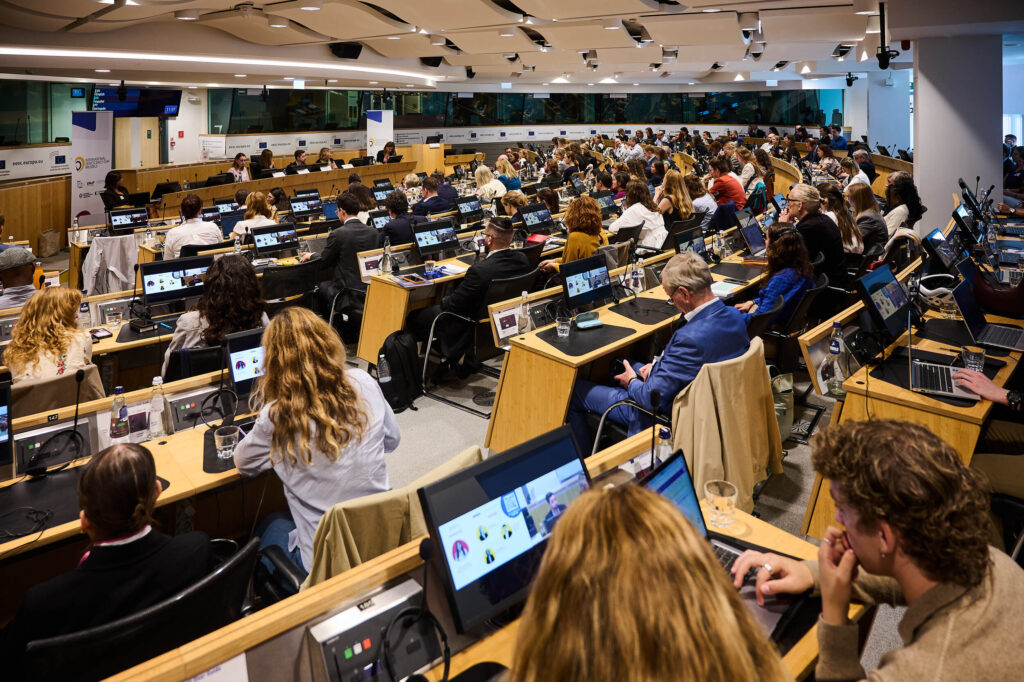
This question was at the heart of the WYDE Initiative session Rethinking Leadership from the Ground Up, held on 17 September as part of the International Democracy Day Brussels Conference.
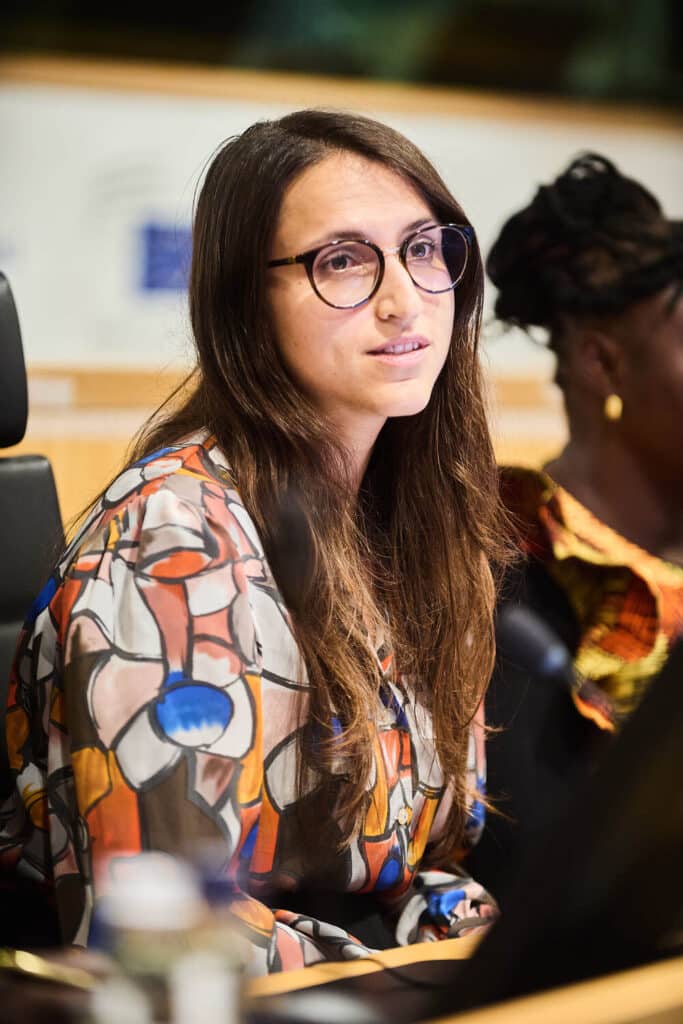
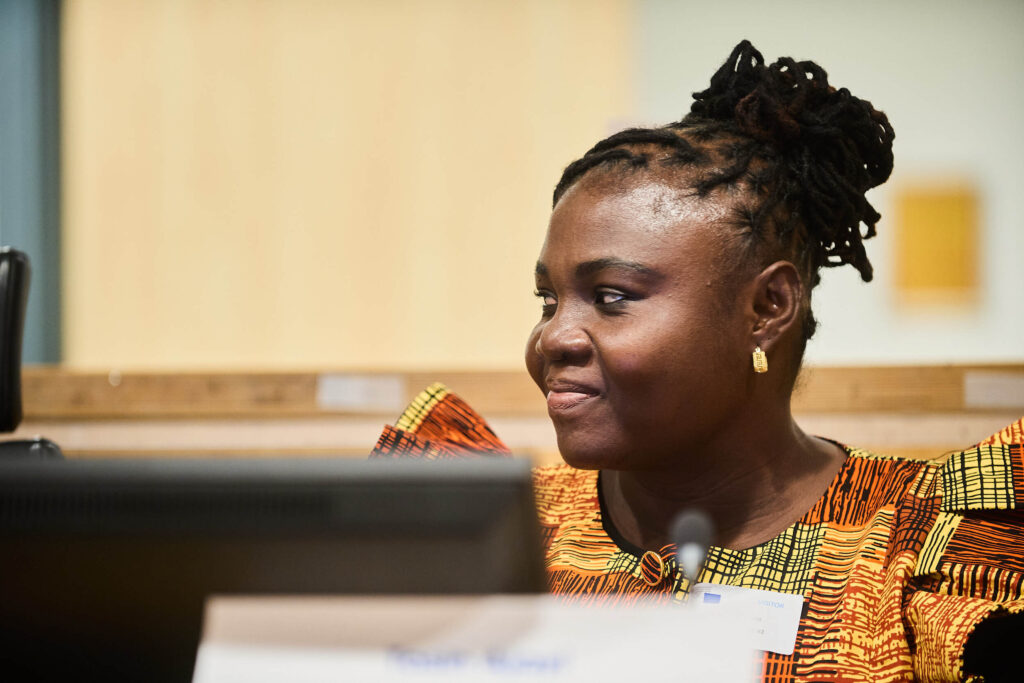
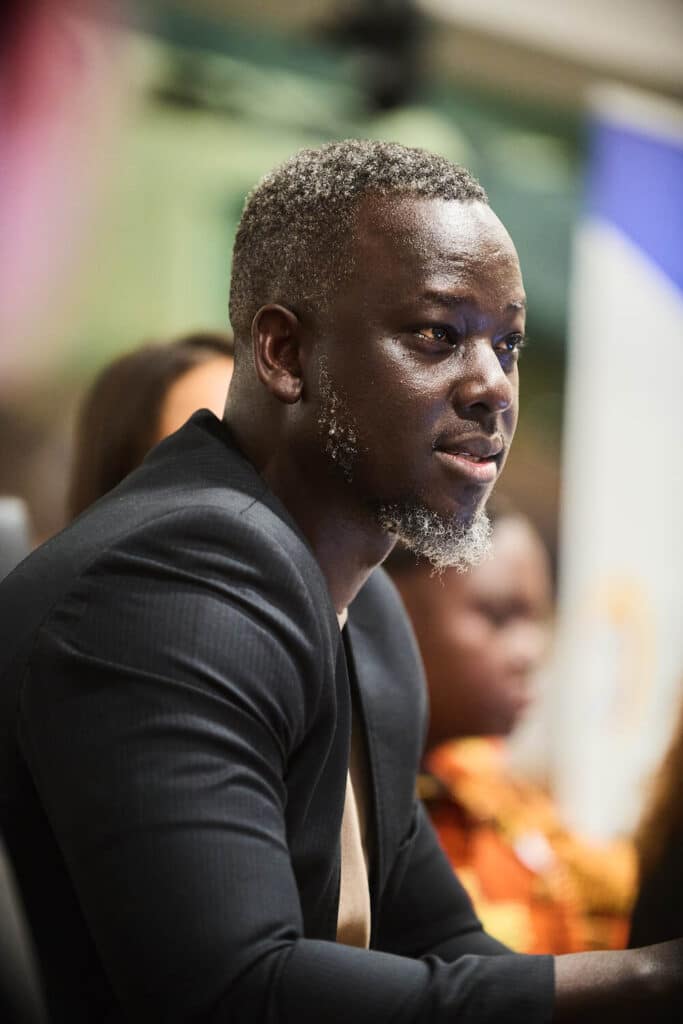
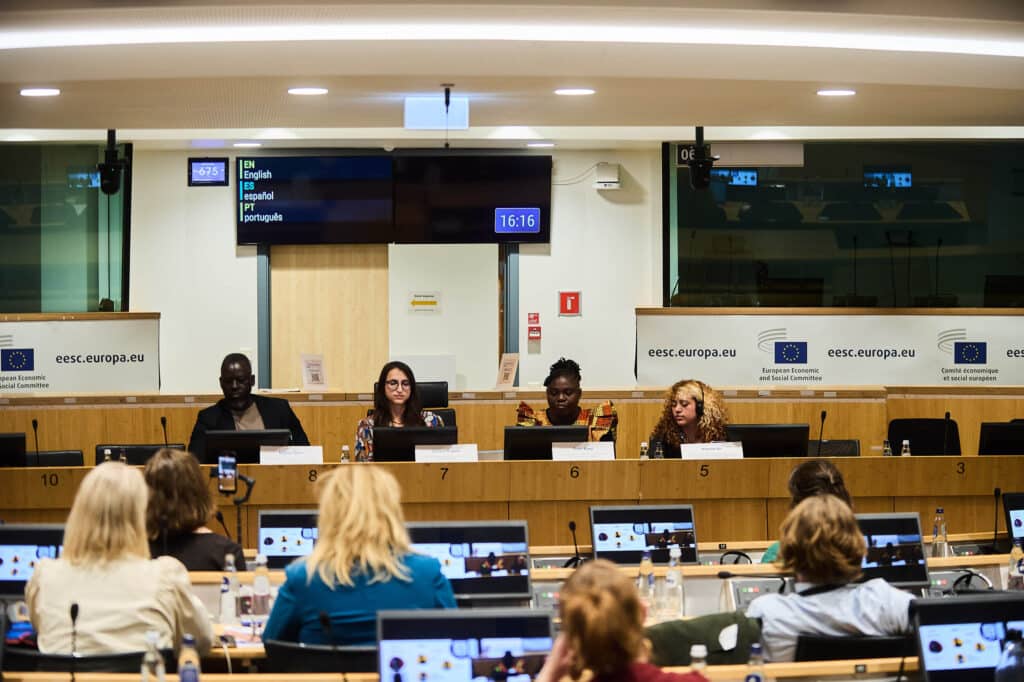
The conversation brought together three perspectives from across the WYDE Initiative: Emmy Otim, Regional Manager East Africa at KIC Sweden, representing WYDE Political Parties; Tosin Apiriola-Ajayi, Executive Director of the Women Environment and Youth Development Initiative (WOYODEV) in Nigeria, from WYDE Women Leadership; and Camila Gil, Colombian anthropologist, activist and member of the Youth Peacebuilders Network, the Community Advisory Board on Digital Rights in Colombia and CIVIX Colombia, from WYDE Civic Engagement. The discussion was moderated by Chiara Grigolo, Associate Programme Officer (WYDE) at International IDEA.
The session asked a question: what can international democracy support learn from the ways leadership and participation are already evolving on the ground?
Leadership does not begin with a title
The discussion opened by challenging one of the most persistent assumptions about leadership: that it begins when someone enters a formal position of power.
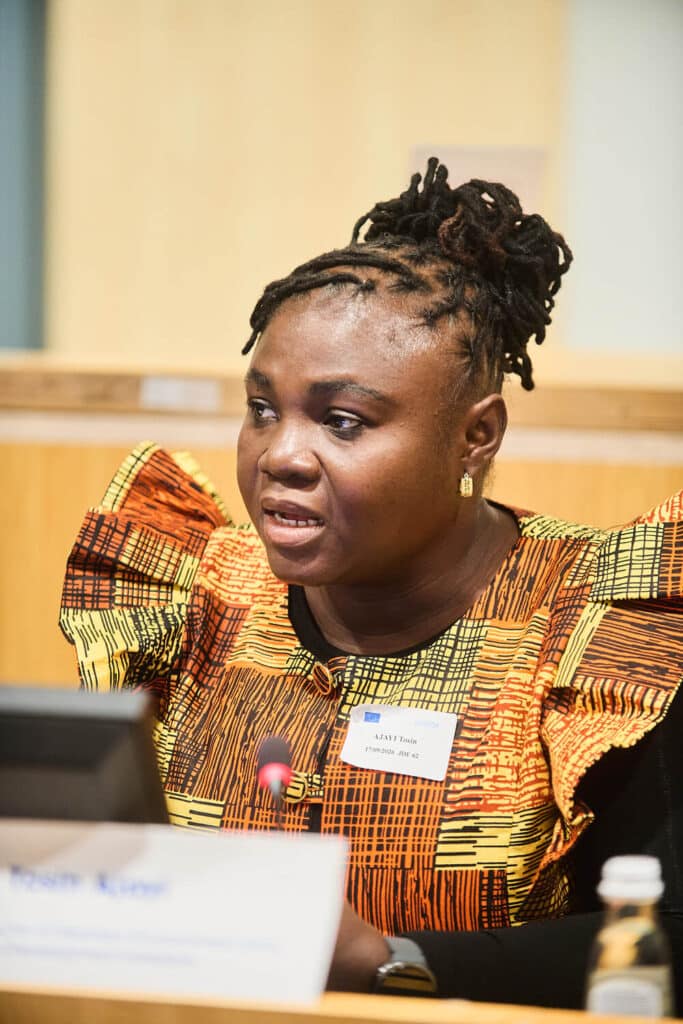
Drawing on more than 15 years of work with women, young people and communities in Nigeria, Tosin Apiriola-Ajayi argued that leadership often starts much earlier — when people organise their communities, mobilise others, advocate for change or begin influencing the decisions that affect their lives.
Communities, she stressed, are not empty spaces waiting for leadership to arrive. They already contain knowledge, networks and people exercising leadership every day — often without describing themselves as leaders.
“Do not arrive on the ground looking for people to lead your programme. Go to the ground looking for people who are already leading — and ask what they need to lead better.”
This shift in perspective has significant implications for democracy support. It means moving away from seeing communities primarily as recipients of programmes and towards recognising them as sources of knowledge, leadership and democratic practice.
As Tosin put it:
“The ground is not the last mile of democracy. The ground is where democracy begins.”
From opportunities to pathways to power
Recognising leadership, however, is only the beginning.
Across the discussion, another question emerged: what happens when people who are already leading try to move into spaces where decisions and power are formally exercised?
For women in particular, Tosin highlighted the gap between encouraging participation and creating the conditions that allow participation to become influence and representation.
Training programmes and leadership opportunities can open doors, but what happens afterwards? Who provides access to networks and mentors? Who helps someone navigate political structures, build political capital or continue when the process becomes difficult?
“We need to move from training women for leadership to accompanying women into leadership.”
This means creating pathways, not just opportunities — and looking beyond the individual leader to the ecosystem surrounding them. Political parties, communities, families, institutions, traditional and religious leaders and access to resources can all determine whether a woman is simply invited into a leadership space or is actually able to exercise leadership once she gets there.
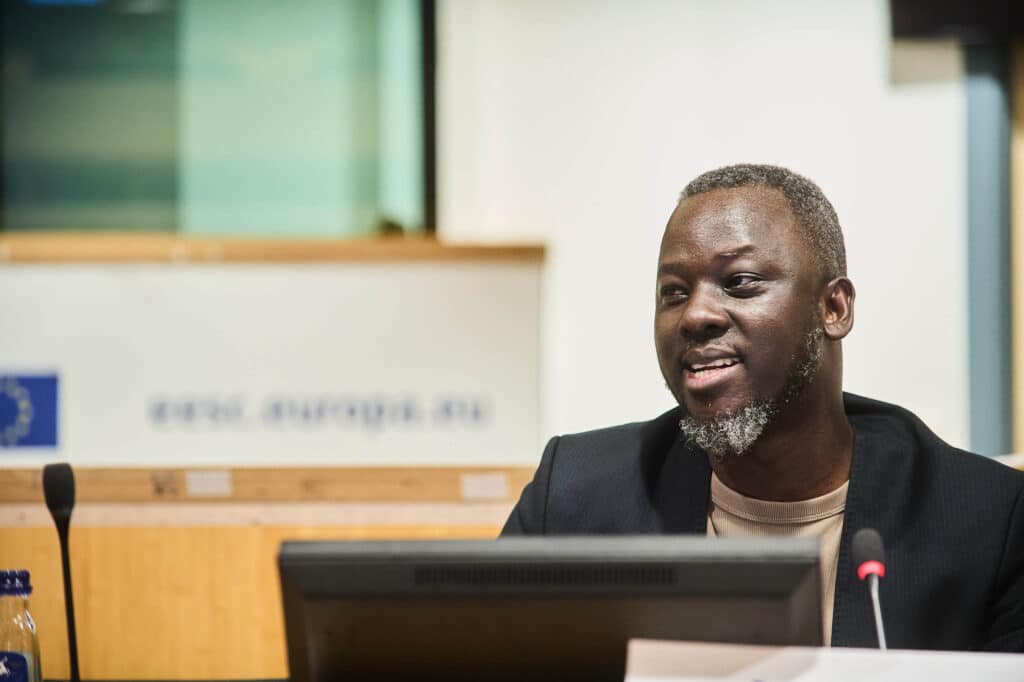
Emmy Otim brought this question directly into the world of political parties. Drawing on his experience working with political actors across Africa, he described how entrenched hierarchies, patriarchal structures and the growing cost of political participation continue to restrict access for women and younger people.
Changing leadership from the ground up, he argued, therefore does not necessarily mean simply replacing the person at the top. It can also mean changing behaviours, practices and systems inside political institutions themselves.
The challenge is to ensure that participation can become influence, and influence can ultimately create pathways to power.
Participation is changing — are we seeing it?
If Tosin and Emmy explored the pathways between community leadership and formal political power, Camila Gil challenged the audience to reconsider where participation itself is taking place.
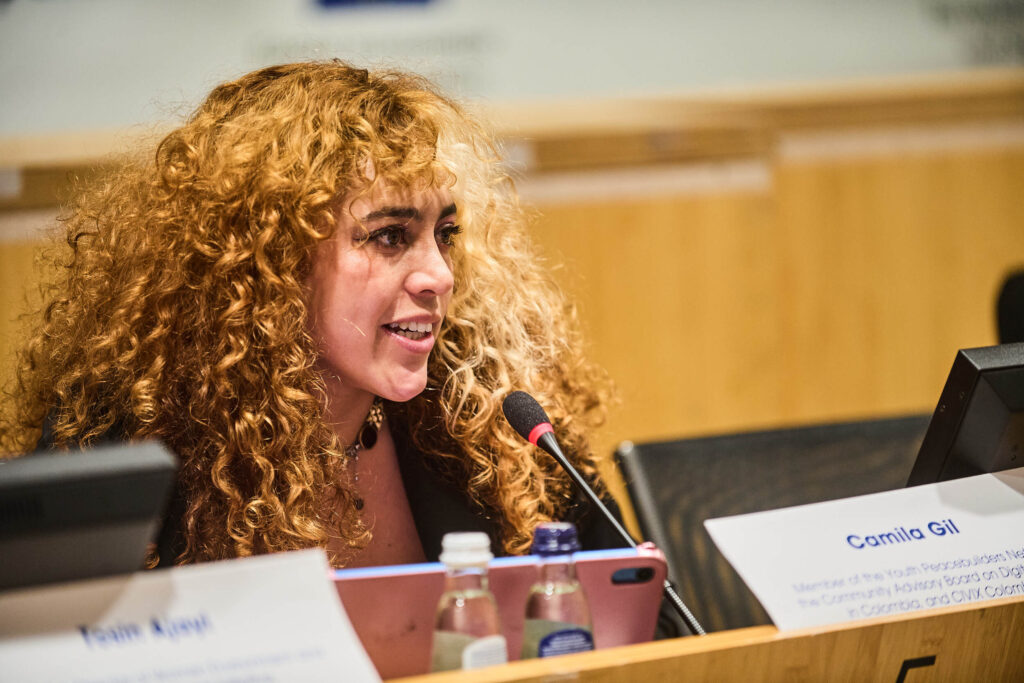
From her own experience beginning in community work in Medellín at the age of 15, Camila described a generation for whom the distinction between digital and physical participation increasingly makes little sense.
A young person might organise something in their neighbourhood and make a video about it; begin a conversation on TikTok or WhatsApp and later meet in person; or first encounter a political issue online before becoming involved in a community process.
In one electoral education initiative in Colombia, almost 300 young people were trained to create videos and share information about elections. For some, creating digital content became their first step towards other forms of civic participation.
But this changing landscape also requires democracy-support actors to question how they identify leadership.
“Visibility is not the same as leadership.”
Someone may have thousands of followers without being involved in a community process, while another person with very little public visibility may have spent years connecting people and generating change in their neighbourhood.
Digital spaces also bring new forms of exclusion and risk. Unequal access, online violence and harassment remain significant barriers. At the same time, actors outside democratic civil society are also competing for young people’s attention online.
For Camila, the answer is not to choose between digital and physical participation, but to understand how the two increasingly reinforce one another — and to meet young people in the spaces where they already are.
Listening also means questioning whose knowledge reaches Brussels
The conversation also raised a less visible barrier between grassroots realities and international democracy support: language.
Many grassroots organisations in Colombia, Camila noted, do not operate in English. That does not mean they lack knowledge, expertise or impact. Often, these are precisely the organisations embedded most deeply in their communities.
Yet language can determine whose experiences reach international spaces and whose knowledge remains largely invisible to them.
“The challenge is not only to ask how young people are participating. It is to ask whether we are truly listening to those who are already building democracy in their territories.”
The observation went to the heart of the session. Listening from the ground up requires more than inviting grassroots voices into international conversations. It also means questioning the mechanisms through which knowledge is recognised, translated and ultimately allowed to influence programme design and policy.
What does this mean for democracy support?
Taken together, the three perspectives pointed towards a broader challenge for the international democracy-support community.
If leadership already exists in communities, if participation is taking new forms, and if the pathway from participation to political influence remains blocked for many people, then democracy support itself needs to be able to adapt.
That may mean listening before designing, recognising leaders who do not yet hold formal titles, creating pathways between participation and decision-making, providing flexible resources and sustained accompaniment, and supporting the less visible work through which leadership develops over time.
Emmy pushed this reflection further by questioning the short-term logic through which democracy support is often funded. Democratic change, institution-building and political leadership do not follow neat project cycles. Supporting them therefore also requires thinking seriously about continuity and what happens when international support withdraws precisely as democratic conditions become more difficult.
The discussion did not offer a single model of leadership — nor was it intended to.
Instead, bringing together the perspectives of WYDE Women Leadership, Civic Engagement and Political Parties showed why leadership needs to be understood across different spaces: communities, digital networks, civil society, political parties and institutions.
The session began with stories of women and young political leaders from Kenya, Uganda and Ghana through a preview of We Shall Lead – Voices Shaping the Future of Africa, the new documentary developed by WYDE Political Parties.
Those individual stories opened a wider question that remained throughout the discussion:
Where is leadership already happening — and what would it take for our democratic systems to recognise it, nurture it and allow it to shape power?
Perhaps rethinking leadership from the ground up ultimately requires something even more fundamental: rethinking how democracy support listens, learns and responds to the people already practising democracy every day.
Event Details
Event: IDD Brussels Conference 2026
Theme: WYDE Initiative Session: Rethinking Leadership from the Ground Up
Date: 17 September 2026
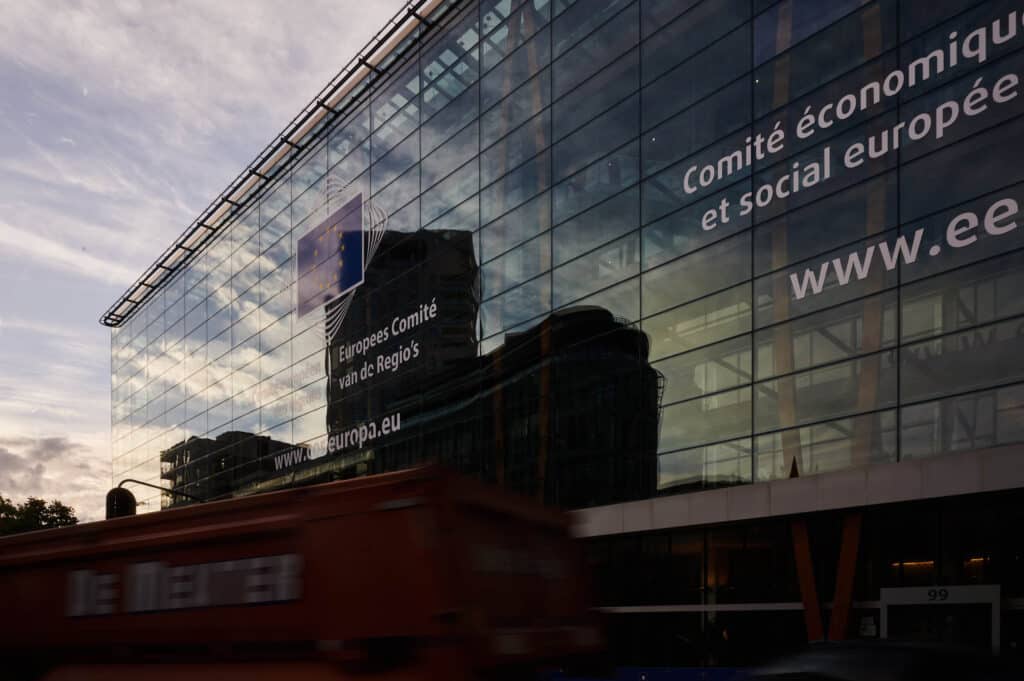
Location: EESC, Brussels, Belgium
Organised by: European Network of Political Foundations (ENoP), Idea International, European Partnership for Democracy (EPD), European Endowment for Democracy (EED) and Carniege Europe.
Project: WYDE Initiative – funded by the European Union
 French
  English