From Ideas to Influence: WYDE Participants Put Democratic Leadership into Practice in Ghana
↩ Back to WYDE
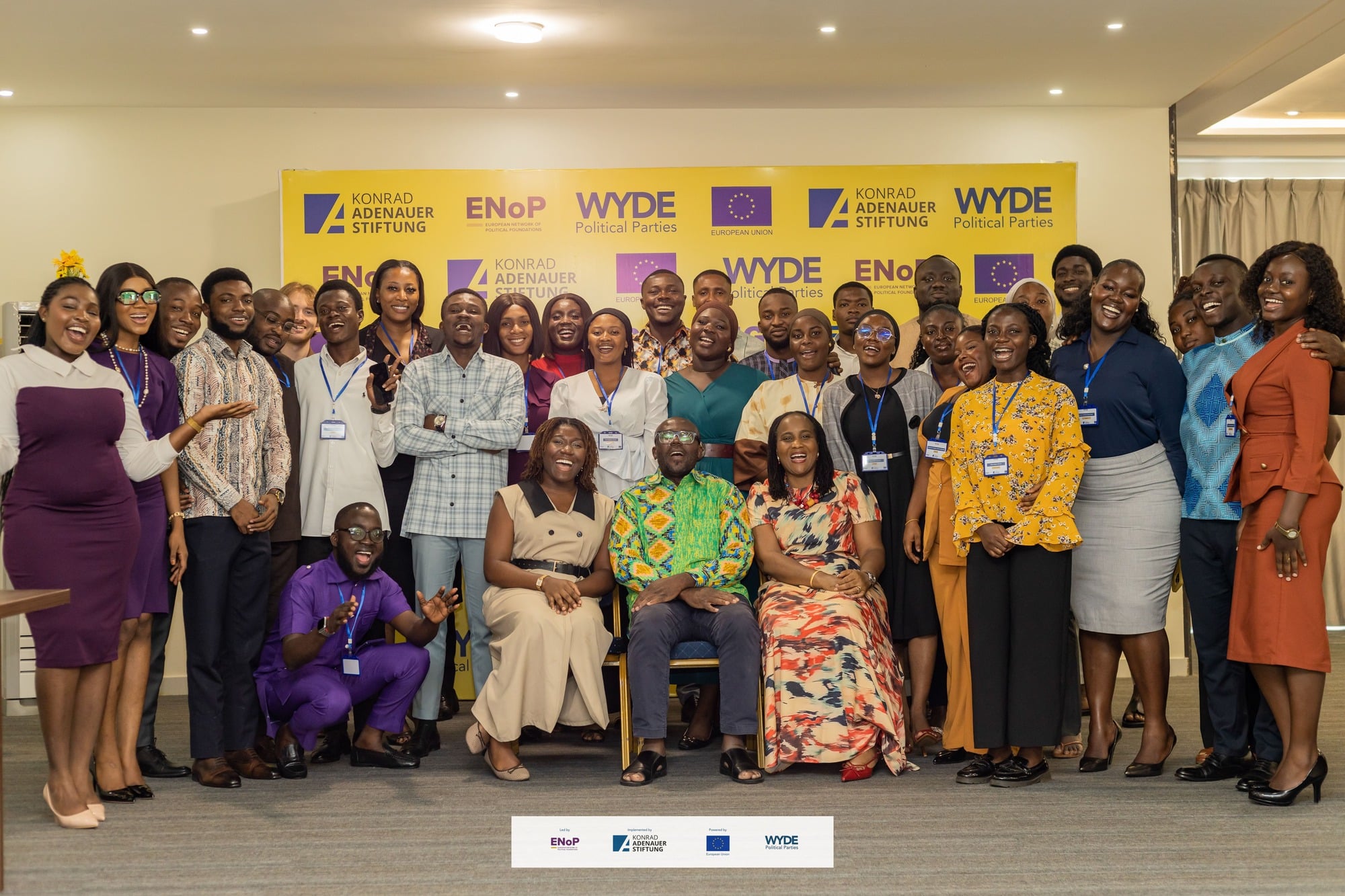
From 25 to 28 June 2026, emerging political leaders from across Ghana came together in Koforidua for the third and final WYDE Residential Training, marking the culmination of an intensive leadership development journey under the WYDE Political Parties project. Organised by the Konrad-Adenauer-Stiftung (KAS) Ghana Office within the framework of the project, led by the European Network of Political Foundations (ENoP) and funded by the European Union, the training focused on “From Ideas to Influence: Advocacy and Policy Engagement for Emerging Leaders.”
Building on previous trainings dedicated to leadership, communication and professional development, this final residential session challenged participants to take the next step: transforming ideas into concrete policy proposals and learning how to influence democratic decision-making through advocacy, dialogue and collaboration.
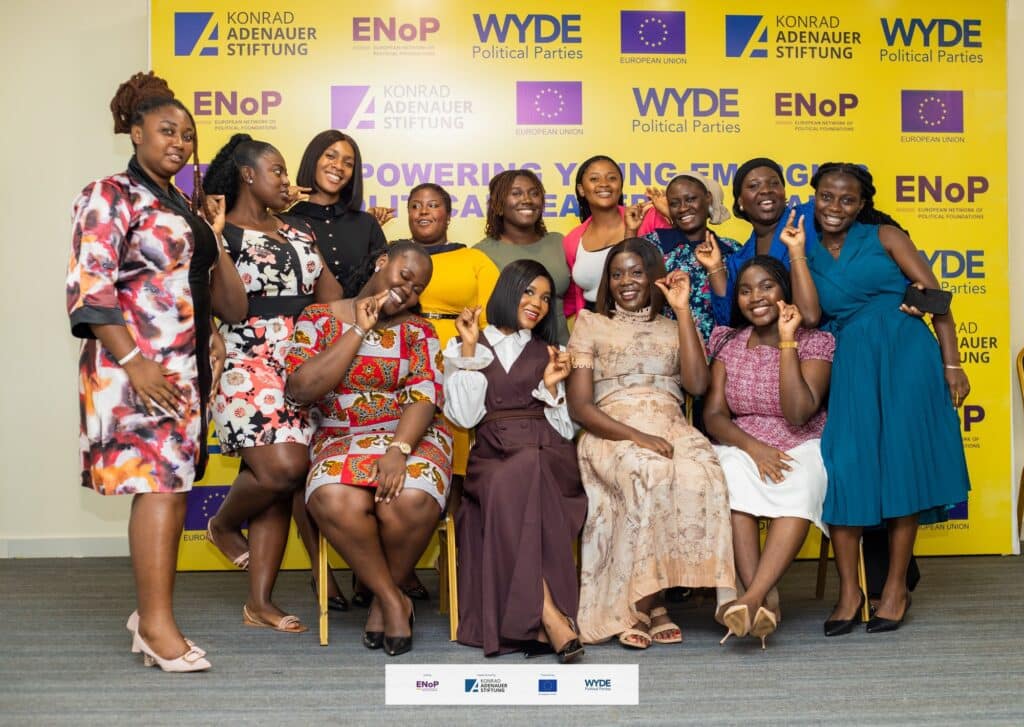
Over two days of intensive workshops, participants explored the foundations of advocacy and policy influence, strengthening their understanding of how public policies are shaped and how young leaders can contribute to democratic governance. Through expert-led sessions, they developed practical skills in policy analysis, policy brief writing, advocacy communication and coalition-building, while working collaboratively to identify governance challenges and formulate evidence-based policy recommendations.
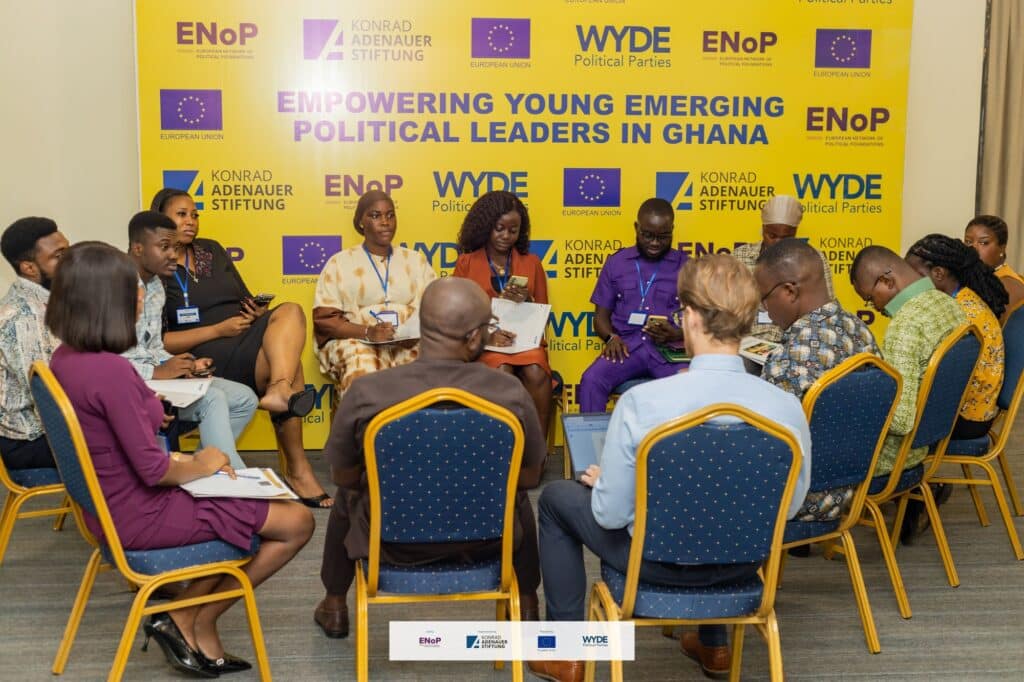
One of the defining features of the training was its highly practical approach. Working in multidisciplinary groups, participants took part in a Policy Lab, where they analysed public policy issues, drafted policy briefs and refined advocacy messages before presenting their proposals to their peers. Throughout the process, constructive feedback, teamwork and peer learning encouraged participants to strengthen both their technical knowledge and their confidence as emerging political leaders.
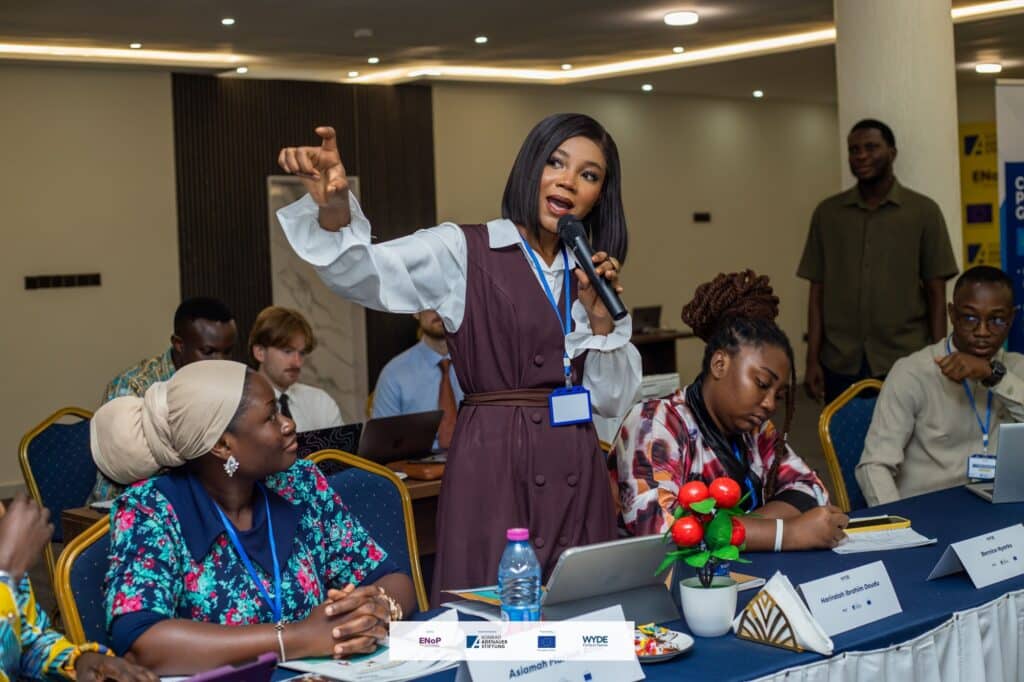
The highlight of the programme was the Parliamentary Simulation, which transformed the training into a dynamic exercise in democratic practice. Assuming the roles of policymakers and parliamentarians, participants presented and defended their policy proposals, negotiated amendments, responded to questions and built coalitions before taking part in parliamentary voting procedures. The simulation offered a realistic insight into how ideas evolve into public policy through debate, negotiation and consensus-building, reinforcing the importance of dialogue and democratic engagement.
Beyond the technical sessions, the residential format fostered meaningful connections among participants from different political backgrounds. Shared discussions, collaborative exercises and informal exchanges strengthened peer networks and demonstrated the value of cross-party dialogue in addressing common governance challenges. The enthusiasm, commitment and collaborative spirit displayed throughout the programme reflected the potential of a new generation of leaders determined to contribute constructively to Ghana’s democratic future.
As the final residential training of the programme, the session represented an important milestone in participants’ leadership journeys. By combining advocacy, policy development and democratic practice, the training equipped emerging leaders with practical tools to engage confidently in public policy processes and contribute to more inclusive and responsive governance.
Through initiatives such as this, the WYDE Political Parties project continues to support democratic development by strengthening political leadership, promoting youth participation in politics and fostering dialogue, knowledge exchange and cooperation between political actors across regions.
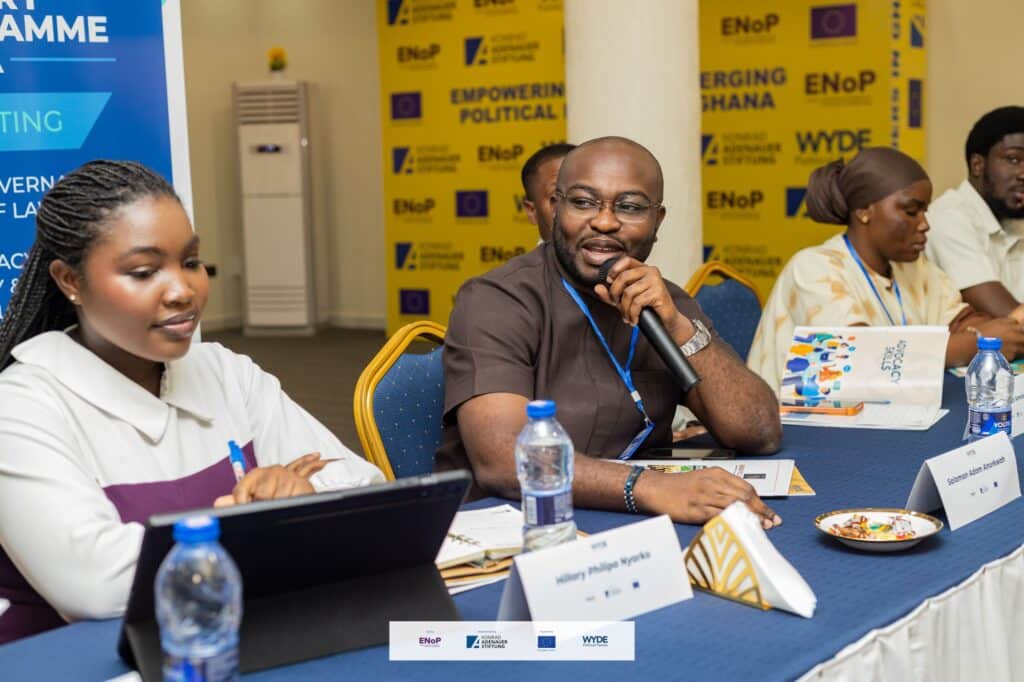
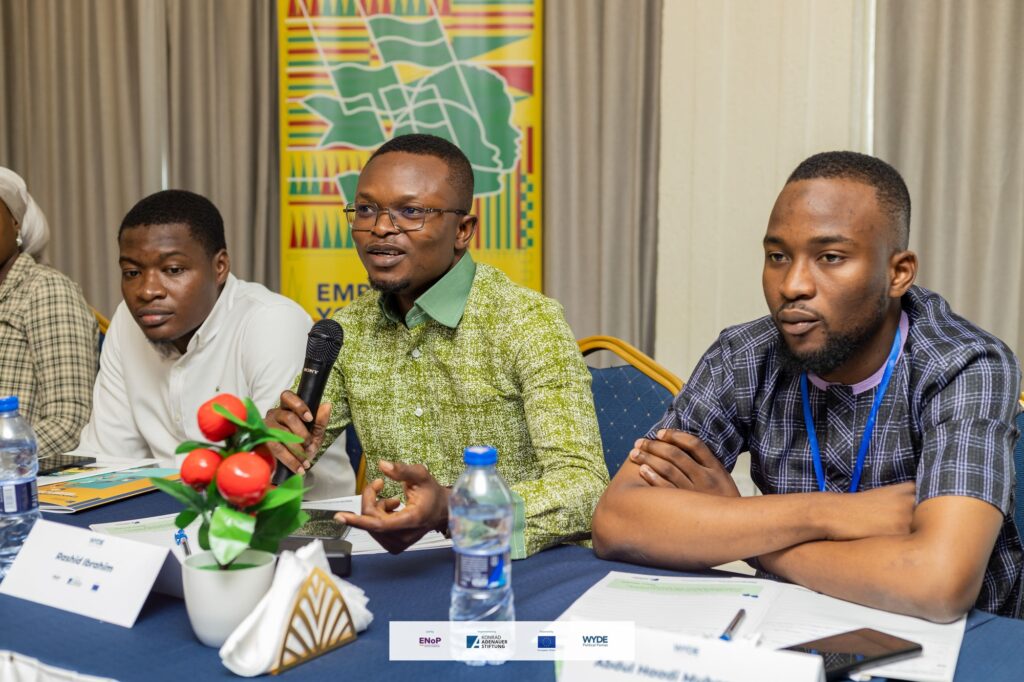
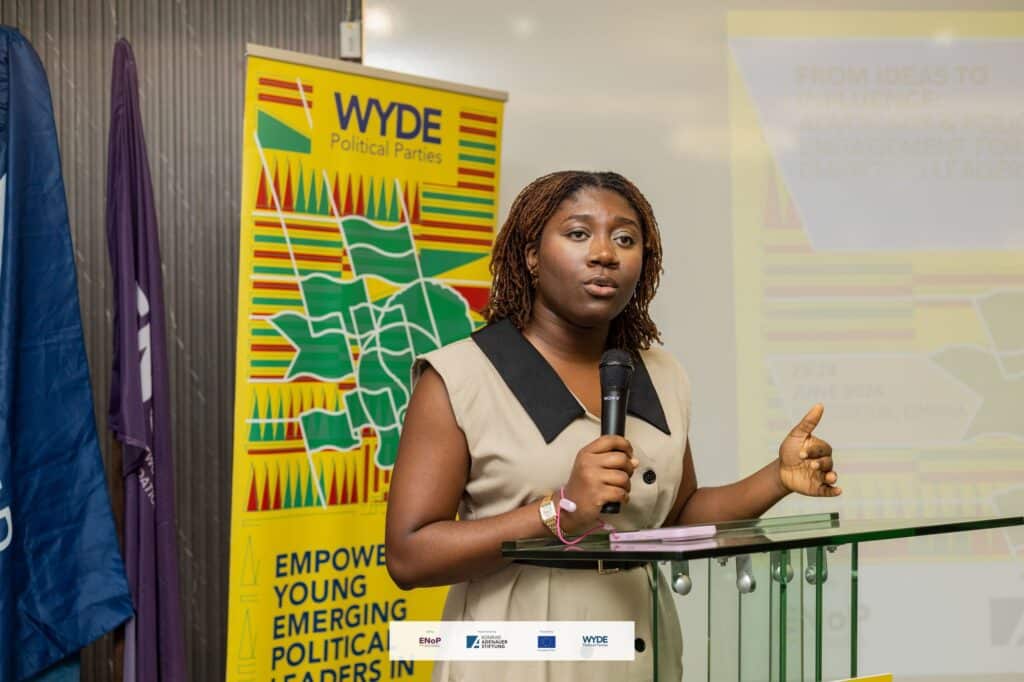
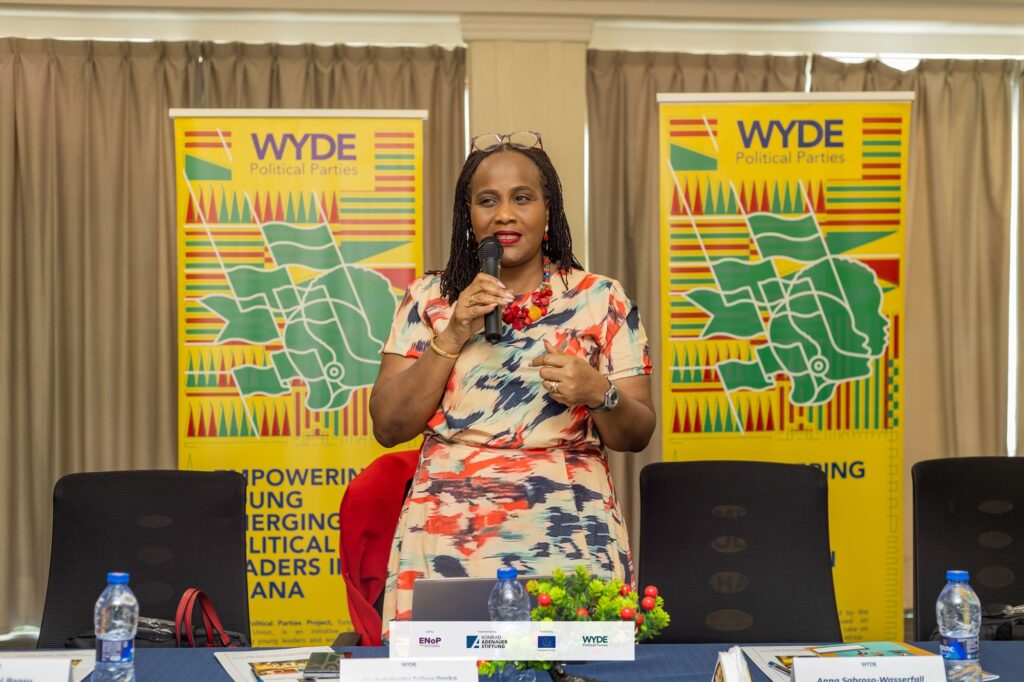
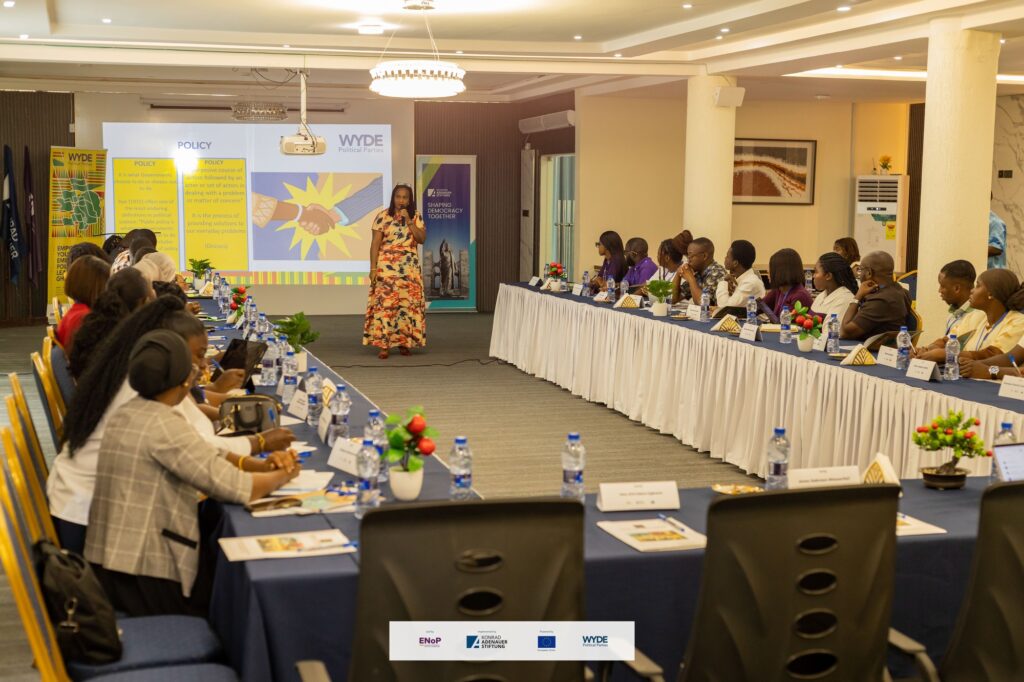
From policy ideas to parliamentary debate.
The final WYDE Residential Training brought together a passionate group of emerging leaders ready to transform knowledge into action. Through collaboration, debate and hands-on policy exercises, participants strengthened not only their advocacy skills, but also the networks and confidence needed to shape more inclusive democratic futures.
 English
  French