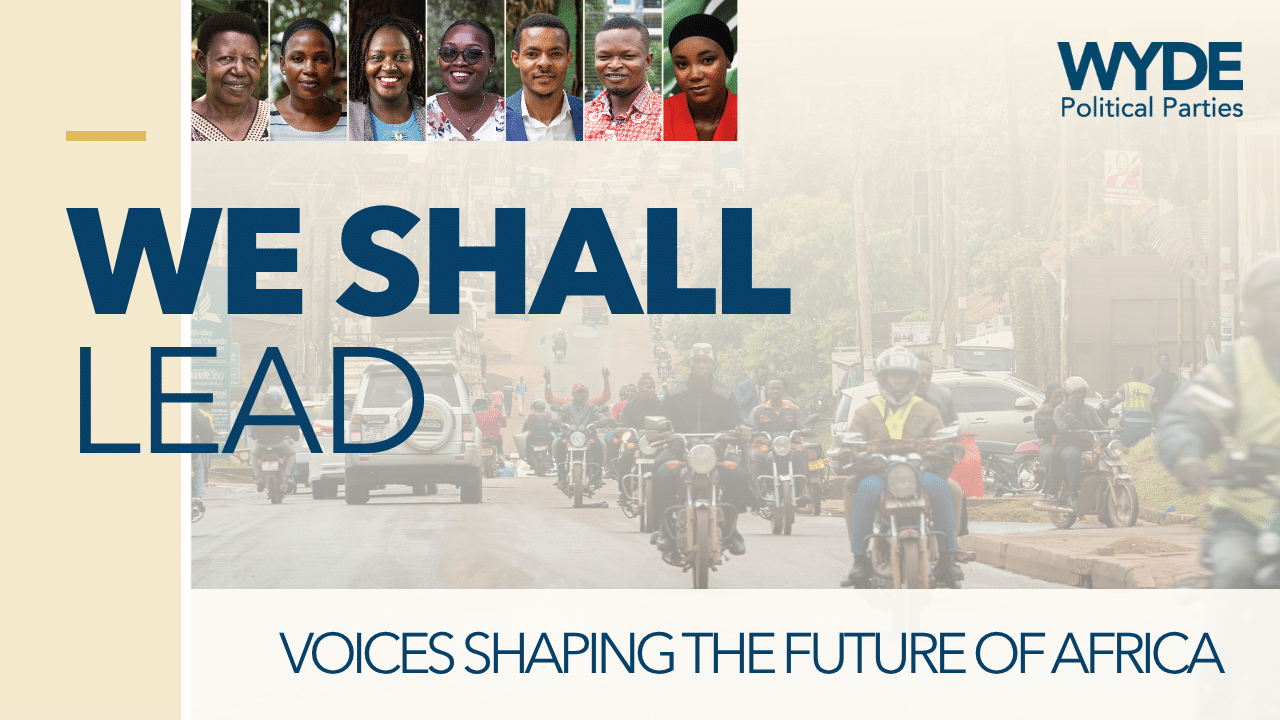
We Shall Lead: Voices Shaping the Future of Africa, the new WYDE Political Parties documentary film
↩ Back to WYDE
A new WYDE Political Parties documentary brings together voices from Kenya, Uganda and Ghana to explore why people still choose politics — and what it means to pursue change from within political institutions.
Why enter politics when trust in political institutions is declining? Why stay when participation can come with exclusion, violence, personal sacrifice or disappointment? And what happens when a new generation decides that changing politics also means being present in the places where political decisions are made?
These are some of the questions at the heart of We Shall Lead: Voices Shaping the Future of Africa, a new documentary produced through WYDE Political Parties.
Filmed across Kenya, Uganda and Ghana, the documentary brings together seven people whose political experiences span different countries, generations and trajectories. Some entered politics after years of civic engagement. Others found their path through community leadership, student politics or political parties. Some have spent decades challenging the structures around them.
What connects them is not a single definition of leadership, nor a shared political ideology. It is the decision to engage.
Why choose politics?
One of the strongest questions to emerge during the filming was also one of the simplest: why do people continue to choose politics when so many others have lost confidence in it?
For some of the younger voices in the film, the answer lies precisely in understanding where decisions are made.
Serah Wanjiku Thiga describes reaching a point where criticising leadership from the outside was no longer enough. Angel Mbuthia speaks about the importance of young people entering political spaces because that is where debate is ultimately translated into decisions and action. Bernard William Ivuti challenges one of the most persistent narratives around youth and leadership: young people are not simply the leaders of tomorrow; they are already leading today.
Their experiences complicate the familiar story of political disengagement among younger generations. Distrust exists. So do frustration and disillusionment. But disengagement is not the only response.
For some, those very frustrations become the reason to enter.
Changing institutions from within
This idea runs throughout We Shall Lead: meaningful political change cannot take place exclusively outside institutions.
That does not mean accepting political systems as they are.
On the contrary, several of the documentary’s protagonists describe entering those spaces precisely because they want them to work differently — to make political parties more responsive, widen participation, challenge established practices and ensure that younger people and women are present where decisions are taken.
The documentary does not romanticise that choice. Its protagonists speak openly about the obstacles that come with political participation: unequal access to power, financial barriers, political violence, gender discrimination, generational hierarchies and the pressure to adapt to established ways of doing politics.
Their stories therefore raise another question: how do you enter a system with the intention of changing it without allowing that system to change what brought you there?
Leadership across generations
We Shall Lead is also a conversation between generations.
Alongside emerging political voices are people whose experience offers a longer perspective on the struggle for political participation and representation.
This intergenerational dimension moves the conversation beyond the idea of simply replacing one generation with another. Leadership is also about creating pathways, transferring experience and opening political spaces so that others can enter them.
The result is a documentary that looks at Africa’s political future not as something waiting to arrive, but through leadership that is already being practised today.
Seven voices, three countries
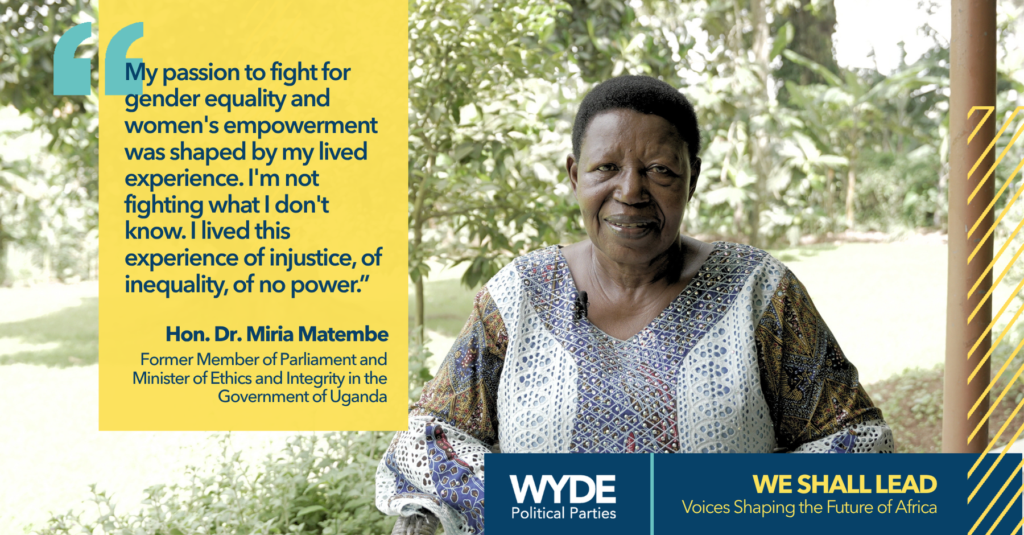
Hon. Dr Miria Matembe (Uganda)
Former Member of Parliament and Minister of Ethics and Integrity in the Government of Uganda; Founding member of the Pan African Parliament – Uganda
With decades of experience in political life and women’s rights advocacy, Miria brings the intergenerational perspective to We Shall Lead. Her story explores leadership as a long-term commitment grounded in purpose, integrity and resilience — and the responsibility of those who opened political spaces for the generations that follow.
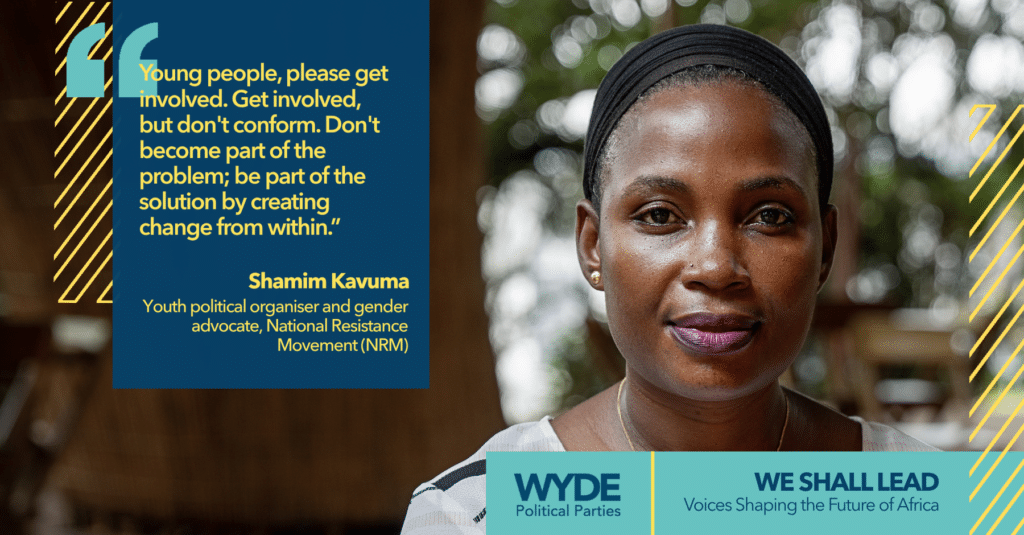
Shamim Kavuma (Uganda)
Youth political organiser and gender advocate, National Resistance Movement (NRM) – Uganda
Shamim speaks from within party politics about what it means to enter established political structures without simply adapting to them. Her reflections centre on creating change from within, making space for younger generations and remaining clear about the purpose that brought you into politics in the first place.
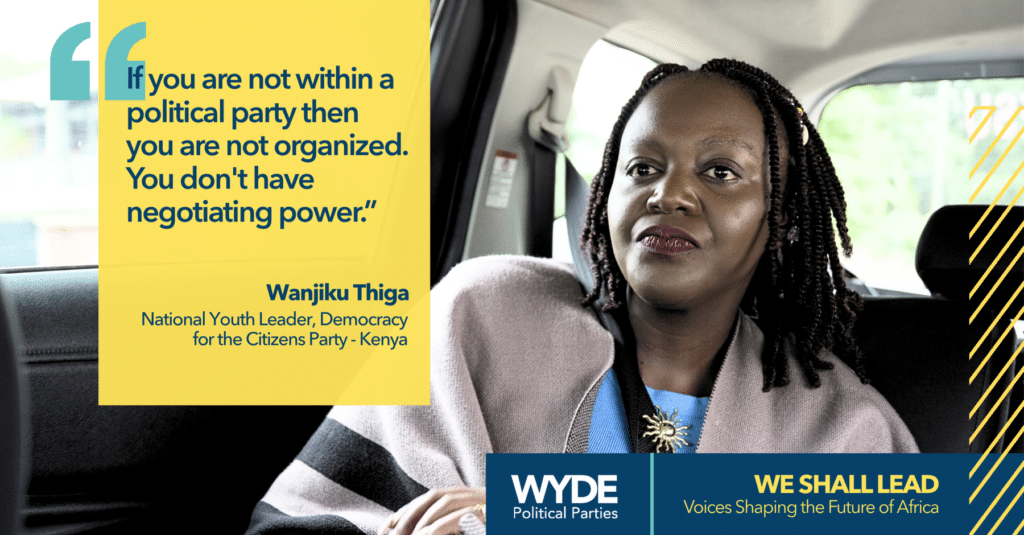
Wanjiku Thiga (Kenya)
National Youth Leader, Democracy for the Citizens Party – Kenya
Wanjiku’s story begins with a decision: to stop criticising leadership from the sidelines and step into the political arena herself. She reflects on the realities facing young women in politics, the risks that participation can carry, and why political parties remain important spaces for organising, negotiating and turning demands into political action.
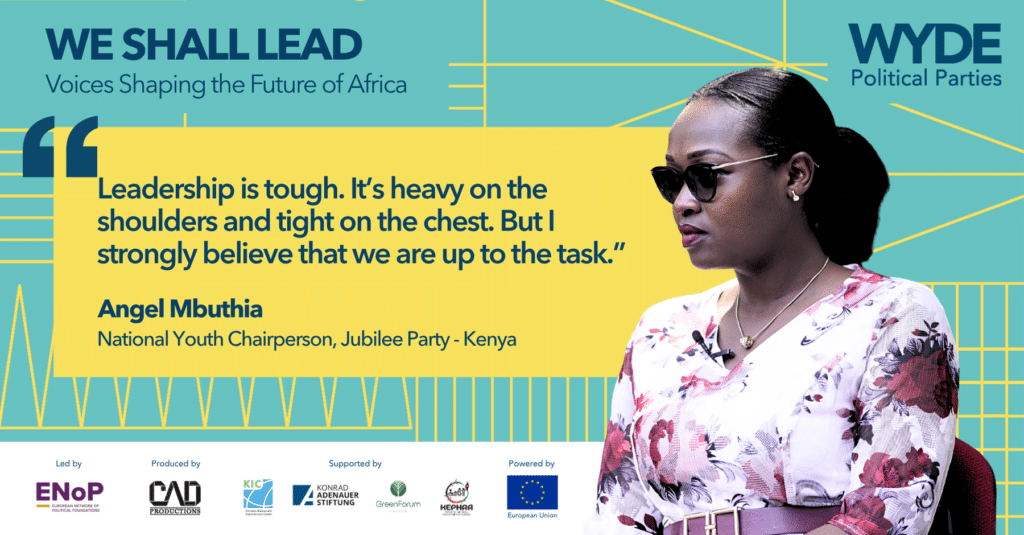
Angel Mbuthia (Kenya)
National Youth Chairperson, Jubilee Party – Kenya
For Angel, participation is inseparable from being present where decisions are actually made. Her story explores why young people need to engage with political parties and institutions from within, while also questioning what those institutions must do differently to create space for younger voices and more inclusive forms of leadership.
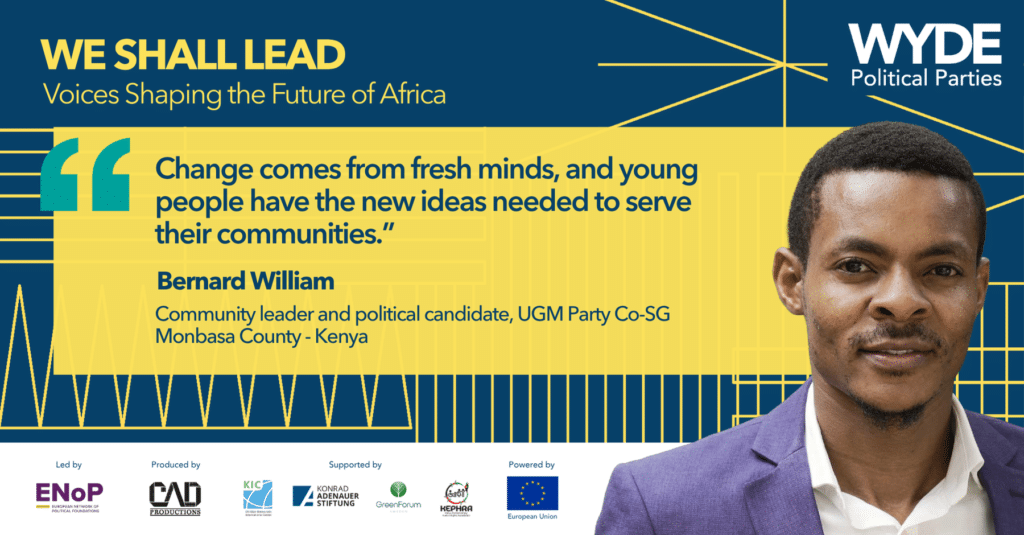
Bernard Williams (Kenya)
Candidate to Senator; UGM Party Co-SG, Mombasa County – Kenya
Bernard connects political leadership directly to community experience. Having grown up seeing the challenges faced by families around him, he describes entering politics as a decision to move beyond frustration and take responsibility — while challenging the idea that young people must wait for tomorrow to lead.
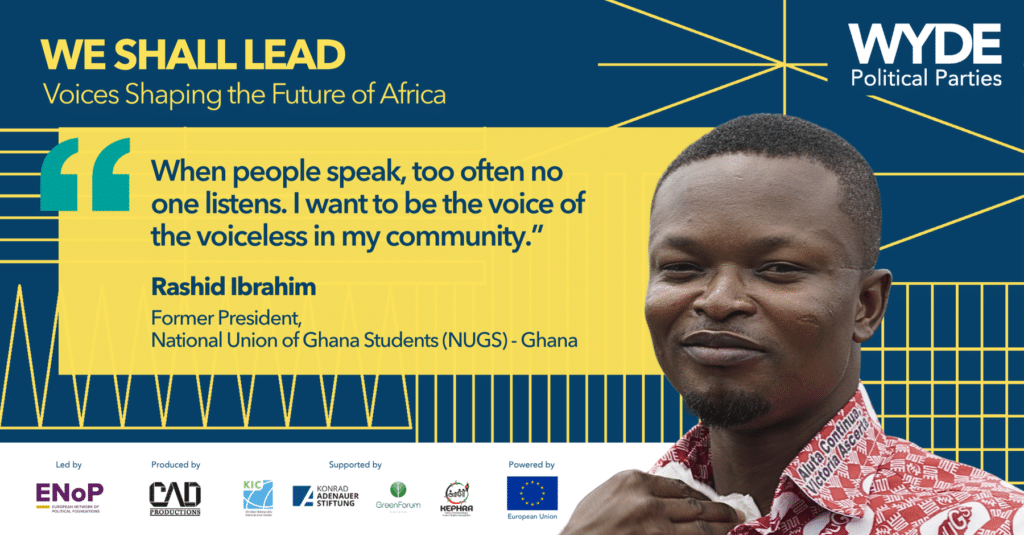
Rashid Ibrahim (Ghana)
Former President, National Union of Ghana Students (NUGS) – Ghana
Rashid brings the perspective of student leadership and representation. His contribution focuses on listening to communities whose concerns too often go unheard and on leadership as a form of service — using representation not simply to occupy a position, but to give others a voice.
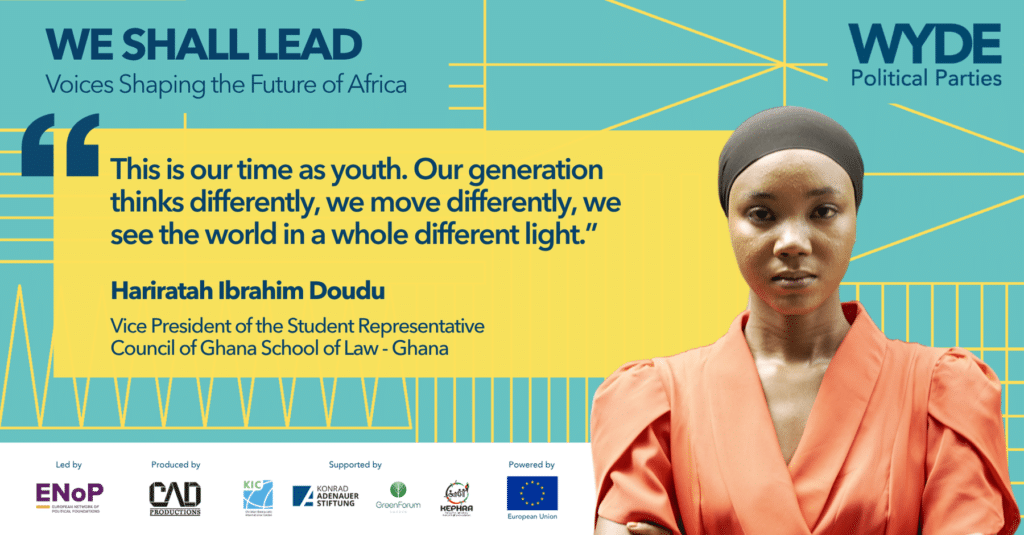
Hariratah Ibrahim Doudu (Ghana)
Vice President of the Student Representative Council of Ghana School of Law – Ghana
Hariratah speaks about a generation that sees, communicates and engages with the world differently — and expects meaningful space to contribute to the decisions shaping its future. Her perspective brings questions of opportunity and representation to the forefront: what is lost when younger generations are present in society but absent from decision-making?
Together, their stories resist the idea that there is one pathway into political leadership or one answer to the challenges facing democratic participation.
Instead, We Shall Lead leaves audiences with a conversation — about participation, representation, integrity, resilience and the choices involved in trying to create change from within.
From documentary to dialogue
The release of We Shall Lead marks the beginning of a wider dissemination and engagement phase.
Through screenings, university dialogues, conferences, youth networks and partnerships across Africa and Europe, WYDE Political Parties will use the documentary as a resource to open conversations around political leadership and democratic participation.
Because the purpose of We Shall Lead is not simply to tell eight stories. It is to use those stories to ask what political leadership can look like today — and to create space for others to join that conversation.
To support this, a We Shall Lead Engagement Toolkit is available for organisations, partners and networks interested in using the documentary to organise screenings, discussions or other engagement activities.
Interested in bringing We Shall Lead into your own space or conversation?
Access the Engagement Toolkit or contact raquel.banonsodini@enop.eu to explore how the documentary and its supporting materials can be used or adapted to your audience.
Documentary information
- Title: We Shall Lead
- Subtitle: Voices Shaping the Future of Africa
- Countries: Kenya, Uganda and Ghana
- Year: 2026
- Duration: 46 min
- Produced by: CAD Productions
- A documentary by: WYDE Political Parties
- Led by: European Network of Political Foundations (ENoP)
- With the support of: KEPHRA, Konrad Adenauer Stiftung (KAS) and Christian Democratic International Center (KIC) and Green Forum.
- Powered by: European Union
 English
  French